Acne Treatment And Cure

Acne Treatment & Cure Solutions

At one time or another all of us have had to deal with acne, some of us more than others. I know I have been there. To understand acne you need to visualize what part of the body is affected and how.(That’s why med schools teach anatomy)

  • So exactly what is Acne??

    Basically, it is believed to be initiated when an otherwise normal hair follicle becomes congested with oil and dirt. Subsequently, this may result in inflammation and swelling of the follicle pore if the opening becomes clogged as seen here:

    Acne Treatment and Cure When the oil from the follicle plugs the pore opening to the point where the oil is not allowed to drain onto the skin surface then we can get blackheads, whiteheads, pimples, and even deeper lumps called cysts or nodules. This may occur on the face, neck, chest, back, shoulders, buttocks and even the upper arms. Acne affects almost every teenager at sometime in their life.

    It can affect any age group including young adults from their late teens well into their 40’s. While not life threatening, acne can be upsetting when severe, it may lead to serious and permanent scarring. Even less severe cases can lead to scarring if not treated properly and the lesions are allowed to remain for a long time causing irreversible damage.

    If your looking for acne solutions like we have listed below then  CLICK HERE NOW!

    —-Permanently Cure Your Acne Within 2 Months

    —-End The Breakouts & See Results In Less Than 7 Days!

    —-Eliminate Blackheads, Excessive Oiliness and Redness

    —-Remove Most Types of Scars and Acne Marks

    —-Look Better, Feel Better and Regain Your Self Esteem

    —-Improve The Quality Of Your Life Dramatically!

    —-Step-By-Step Fully Illustrated Guides

    —-Professional Step-By-Step Instructional Videos

    Blackheads, also called open comedones, typically form as a result of too much oil accumulating in the pores on our skin . They commonly present as a yellow, brown or black bump/spot on our skin. If a blackhead becomes infected, it may become inflamed and turn into a pimple.

    Blackhead Cross-section

    This excess oil accumulates and once it is exposed to air and dirt, it clogs the pores and becomes a blackhead.

    Aside from excess oil, the appearance of blackheads occurs as a result of poor hygienic habits. Oily skin that is not thoroughly cleaned on a regular basis becomes prone to blackheads.

    ACNE TREATMENT FOR DIFFERENT SKIN TYPE

    There are  hundreds of acne treatment products you can buy online., however how do you decide which product is most suitable for your skin type and condition?

    Everyone’s skin is different and requires a different treatment approach.

    Take a minute and read the following information to find out which type of products may work the best for you.


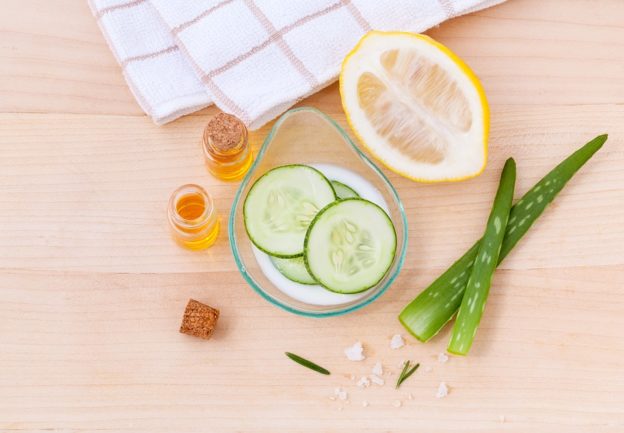
    Natural Acne Remedies


     It is a fact that acne is one of the most common forms of skin problems prevalent among teens, adults and pregnant women. Many people are bothered when acne spots suddenly form and erupt into the skin, most especially in the face. Acne can be a little painful, can cause discomfort and can be an ugly sight. Worse, if handled inappropriately and left untreated, acne can lead to scars, marks and pigmentations that may eventually be permanently fixed in the skin.

    What are natural remedies for acne? These are simple remedies that have been used for ages to cure, curtail and even prevent formation of the skin problem. You may be surprised to realize that many of home or natural remedies for acne can be conveniently found in the kitchen. Sometimes, you may throw away excess food ingredients, herbs and condiments, not knowing that they could have other uses other than as ingredients for cooking.

    Natural remedies for acne can be easily done at home and could not cost much. As mentioned, most remedies are already found in the kitchen or in the fridge. For some time, many people have preferred these remedies over available medications and treatments available commercially in the market. This is because natural remedies of course are cost effective and are free from any form of potential side effects. The ingredients and substances are all natural, organic and are undoubtedly safe for use. Moreover, natural remedies do not require prescription and the instructions and procedures can be easily executed.

    What are natural remedies for acne? There are hundreds of them. Here are several of the simplest and most effective remedies that may readily be available and accessible. These are side-effects free and are practically costing less, if not nothing.

    • Take orange peel and apply the extract into acne spots.
    • Mix cinnamon powder and honey to form a paste. Gently and generously apply this paste into the skin before going to bed; then leave it overnight. Wash it first thing in the morning.
    • Boil half a glass of milk and add some fresh lime juice. Cool the solution and apply to the skin. This is best for treating not just acne but also cracked skin and blackheads.
    • Apply the paste of ripe tomatoes into the acne spots and keep it there for about an hour before washing out.
    • Soak lettuce in water. Wash the face with this water.
    • Fresh mint juice applied to the face before going to bed could cure acne in an instant.
    • A glass of fresh wheat grass juice for several days could be a good and effortless way to get rid of acne.
    • Combine a tablespoon of brown sugar and two tablespoons of white sugar to form a paste. Rub this into the face and leave for a few minutes before washing out.
    • Mix a glass of unboiled milk with a gram of flour and use the solution as a daily face or skin wash.

    Acne Types

    No comments

               There are many different types of acne that can range from mild to very severe and may occur on any part of your body. When you read about acne or other skin diseases, you will encounter terms that may be confusing. For example, the terms used to describe an acne lesion would be -comedo, papule, pustule, nodule and cyst—so it would be easier for you to understand if you know what each one means. Likewise, a photo that shows you the visual presentation of each lesion would be even more helpful.. 

    Following are common acne terms and their definitions to get you started.. We have also inserted photos to give a visual presentation of what these conditions look like. 


    Lesion—common medical term used when referring to a physical alteration of any tissue, e.g.,the skin, caused by disease or injury. A lesion may be external (e.g., acne, skin cancer, scraps, knife cut), or internal (e.g., stoamch ulcer, lung cancer, atherosclerosis in a blood vessel, etc).


    Comedo-(plural comedones)—A comedo is a sebaceous follicle plugged with sebum, dead cells from inside the sebaceous follicle, tiny hairs, and sometimes bacteria. When a comedo is open, it is commonly called a blackhead because the surface of the plug in the follicle has a blackish appearance. A closed comedo is commonly called a whitehead; its appearance is that of a skin-colored or slightly inflamed “bump” in the skin.Acne Cure
    The whitehead differs in color from the blackhead because the opening of the plugged sebaceous follicle to the skin’s surface is closed or very narrow, in contrast to the distended follicular opening of the blackhead. Neither blackheads nor whiteheads should be squeezed or picked open, unless extracted by a dermatologist under sterile conditions. Tissue injured by squeezing or picking can become infected by staphylococci, streptococci and other skin bacteria.


    Papule—A papule is defined as a small (5 millimeters or less), solid lesion slightly elevated above the surface of the skin. A group of very small papules and microcomedones may be almost invisible but have a “sandpaper” feel to the touch. A papule is caused by localized cellular reaction to the process of acne. This photo shows papules and comedones on the face of an acne patient:
     

    Pustule—A dome-shaped, fragile lesion containing pus that typically consists of a mixture of white blood cells, dead skin cells, and bacteria. A pustule that forms over a sebaceous follicle usually has a hair in the center. Acne pustules that heal without progressing to cystic form usually leave no scars. This photo shows pustules, papules and comedones on the face of an acne patient:
    Acne Treatment
    . 

    Macule—A macule is the temporary red spot left by a healed acne lesion. It is flat, usually red or red-pink, with a well defined border. A macule may persist for days to weeks before disappearing. When a number of macules are present at one time they can contribute to the “inflamed face” appearance of acne. This photo shows the “red face” appearance of acne with macules:
    Acne Treatment and Cure
     

    Nodule—Like a papule, a nodule is a solid, dome-shaped or irregularly-shaped lesion. Unlike a papule, a nodule is characterized by inflammation, extends into deeper layers of the skin and may cause tissue destruction that results in scarring. A nodule may be very painful. Nodular acne is a severe form of acne that may not respond to therapies other than isotretinoin (Click on Acne Treatments) 

    Cyst—Cyst are sac-like lesions containing liquid or semi-liquid material made up of white blood cells, dead cells, and bacteria. It is larger than a pustule, severely inflamed, extends into deeper layers of the skin, may be very painful, and can result in scarring if not treated aggressively and quickly.
    Cysts and nodules often occur together in a severe form of acne called nodulocystic. Systemic therapy with isotretinoin(Accutane, Sotret, etc) is sometimes the only effective treatment for nodulocystic acne. Some acne investigators believe that true cysts rarely occur in acne, and that (1) the lesions called cysts are usually severely inflamed nodules, and (2) the term nodulocystic should be abandoned. Regardless of terminology, this is a severe form of acne that is often resistant to treatment and likely to leave scars after healing. These photos show nodular, cystic acne:
    Acne Treatment
     

    ==>>LOOK HERE<<==If you want to get rid of your acne TODAY!! 


    Who gets acne? 

    Almost 100% of people between the ages of twelve and seventeen have had a whitehead, blackhead or pimple, regardless of race or ethnicity. Many young people are able to manage their acne with over-the-counter (OTC) medications. However, for others acne is more serious. In fact, Statistics show that between 40-50% of adolescents by the age of fifteen have acne severe enough to require some treatment by a physician. 

    In most cases, acne starts between the ages of ten and thirteen and usually lasts for five to ten years. It normally goes away on its own sometime in the early twenties. However, acne can persist into the late twenties or thirties or even beyond. Some people get acne for the first time as adults. 

    Acne affects young men and young women about equally, but there are differences. Young men are more likely than young women to have more severe, longer lasting forms of acne. Despite this fact, young men are less likely than young women to visit a dermatologist for their acne. In contrast, young women are more likely to have intermittent acne due to hormonal changes associated with their menstrual cycle and acne caused by cosmetics. These kinds of acne may afflict young women well into adulthood. 

    Acne lesions are most common on the face, but they can also occur on the neck, chest, back, shoulders, scalp, and upper arms and legs. 


    Typical Acne Patterns
     

    Acne also has significant economic impact. Americans spend well over a hundred million dollars a year for nonprescription acne treatments, not even taking into account special soaps and cleansers. But there are also the costs of prescription therapies, visits to physicians and time lost from school or work. 

    Pro Active Acne Care

    Here are some simple tips to help you get better results from your current treatment plan. Medications alone  cannot get you the clear skin you want.

    These suggestions are to be used by those under the care of a dermatologist and are not meant to be the only treatment regimen used:

    1. Use your medications according to the instructions from your dermatologist. Acne only clears when the treatment targets everything that is causing the acne. Since most acne medications target only 1 or 2 causes, 2 or 3 products are often necessary. To see clearer skin, these products must be used as prescribed.

    2. Do Not Use Old Medications That  Have Not Been Prescribed By Your Doc. Using acne products that are not part of the treatment plan prescribed by your dermatologist can irritate your skin. Irritated skin usually leads to more breakouts. For best results, dermatologists recommend using only the acne-fighting products and medications in your treatment plan.

    3. Ask Questions. Dermatologists do not want patients to feel confused about acne treatment. If you do not understand something, ask about it. If an acne treatment option not prescribed by your dermatologist interests you, be sure to mention it. Asking questions is often the answer to effective acne treatment.

    4. Never pop, squeeze, or pick acne. Popping and squeezing pimples, whiteheads, blackheads, and cysts tends to make acne worse. All this does is make the acne last longer. This can make it difficult to see clearer skin no matter what treatment you are using. Trying to get rid of a pimple by popping or picking also can lead to scarring, which can be permanent.

    5. Avoid abrasive soap, facial scrub, toner, astringent, and masks. These can irritate the skin, and irritated skin is more likely to break out. Irritated skin also makes it more difficult to tolerate acne medication. A mild cleanser used twice a day to wash the skin is actually more effective for controlling acne and preventing breakouts.

    6. Do not scrub your skin clean. While scrubbing away oil and grime may seem like a good idea, scrubbing actually irritates acne-prone skin. Irritating the skin generally leads to breakouts.

    When washing the skin, use lukewarm (not hot) water and gently apply a mild cleanser with your fingertips. Washcloths and puffs tend to be too abrasive. Limiting washing to twice a day can help reduce irritation and dryness.

    7. Wait 5 to 15 minutes to apply acne medication. Applying acne medication right after you shower or wash your face can irritate the skin and lead to breakouts. Wet skin is most absorbent. To avoid irritation, dermatologists recommend waiting 5 to 15 minutes before applying acne medication.

    8. Use only oil-free skincare and hair care products. Makeup, hair gel, and other products used by people with acne-prone skin should not contain oil. Oil tends to clog pores and lead to breakouts. Look for products that are labeled “oil free,” “nonacnegenic,” or “noncomedogenic.” This means the product does not clog pores.

    9. Apply acne medication before makeup. Wearing an oil-free makeup is fine, but make sure it does not prevent the acne medication from working. Makeup should always be applied after topical acne medication.

    10. Continue using the medication when skin clears. To keep skin blemish free, most people with acne need to continue using at least 1 acne medication. If you have been using an over-the-counter product, you may be able to taper your use to a few times a week.

    11. Gently cleanse skin after sweating. Sweating, especially under a hat or helmet, can aggravate acne-prone skin. Gently cleansing the skin as quickly as possible afterwards can help prevent breakouts. When cleansing the skin, avoid the temptation to rub or scrub sweat from the skin. This can irritate the skin and cause breakouts.

    12. Give acne-fighting products enough time to work. As a rule of thumb, it takes 6 to 8 weeks before you begin to see an improvement. Improvement does not mean blemish-free skin, but a noticeable difference. It generally takes about 6 months to see clear skin.

    Effective Treatment Possible
    Tremendous gains have been made in acne treatment. Today, virtually every case of acne can be resolved. If these tips do not help clear your skin, speak with a dermatologist.

    Acne Home Remedies

    No comments

    Personal Tips For Better Acne Care

    Acne is a tremendously embarrassing and burdensome problem. It is easy to feel that you don’t have control over your breakouts. But the fact is, you do. Now, your first response may be to assume that I’m going to recommend you see your dermatologist. Well, think again. Natural remedies can be just as effective and medications. Possibly more powerful. Sometimes, all your body needs is the right nutritional balance and proper skin care. Here are some easy things you can start doing today to help you heal your acne. You should notice a difference in about 4 weeks.

    • Apply a honey mask to your face once or twice a week – Honey has antibacterial properties so it is great for disinfecting and healing minor blemishes. It is also gentle on sensitive skin.
    • Wash twice a day with acne soap – You should wash your face twice a day with a sulfur based soap designed for acne. Once when you first wake up in the morning and then, right before you go to bed at night. Be extremely gentle to your skin when washing – do not scrub or use any sort of rough cloth. Overwashing your skin will actually stimulate your sebaceous glands to produce more sebum, thus increasing your acne.
    • Keep your hair off your face – If you have long hair or bangs, pull your hair off your face. Your hair contains oils as well, and will contribute to your breakouts. You’ll also want to wash your hair everyday and after workouts
    • Take a potent multi-vitamin – Acne can be a sign that something is wrong on the inside. Your skin depends on nutrition. It is a vital organ that is usually neglected. If your body is not receiving the right nutrition, it will fight back. One common way it will rebel is to produce excessive sebum, clogging pores, and reducing the ability for your skin to heal and fight bacteria.
    • Include chromium in your diet – Chromium is well known for weight loss diets. But it is also excellent for healing infections on the skin. Taking a chromium supplement once a day will help heal your pimples quickly and prevent future breakouts.
    • Eat carrots for beta-carotene (Vitamin A) – Vitamin A strengthens the protective tissue of the skin and actually prevents acne. It helps reduce sebum production. This vitamin is essential for the maintenance and repair of the tissue which the skin and mucous membranes are made of. Vitamin A is also a powerful antioxidant needed to rid your body of toxins. Did you know that a deficiency in vitamin A can actually cause acne?
    • Avoid wearing makeup – Leaving makeup products on your skin only contributes to clogging your pores, causing more pimples and blackheads. If you feel you must wear makeup, be sure it is water-based.
    • Do not pick or squeeze your blackheads and pimples – As tempting as it may be, do not squeeze, scratch, rub or touch your pimples and blackheads. Do any of these actions, actually increases the sebum production. Plus, when you squeeze, you are actually rupturing the membranes below your skin, causing infection and sebum to spread underneath your skin. The result is more pimples.
    • Wash your pillow case every other day – Your face lays on your pillow case every day. Your pillow case absorbs the oils from your skin and reapplies the dirt and oil. Thus causing breakouts. Keep your sheets and pillow cases clean.
    • Eat foods rich in zinc – Zinc is an antibacterial agent and a necessary element in the oil-producing glands of the skin. A diet low in zinc can actually cause acne breakouts.

    Powered by WordPress Web Design by SRS Solutions © 2010 Acne Treatment And Cure Design by SRS Solutions